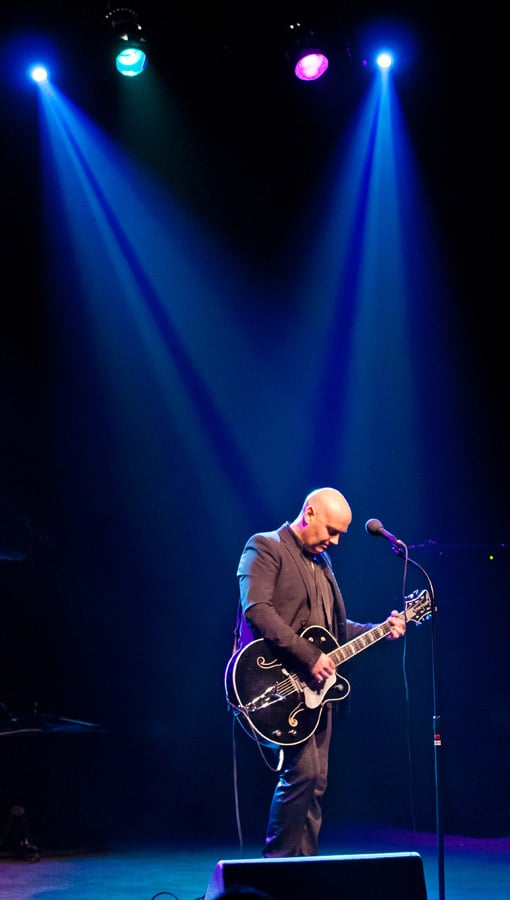
Music has always been a big part of my life; from the instruments I've picked up along the way, to a growing library of albums in numerous genres, music has been as much a part of me as my own DNA. I had the chance recently to go to a concert featuring the former front man of one of my favourite bands growing up; Peter Furler, formerly of the Newsboys, was playing at the Kelowna Community Theatre, and I couldn't pass up the opportunity to bring my camera.
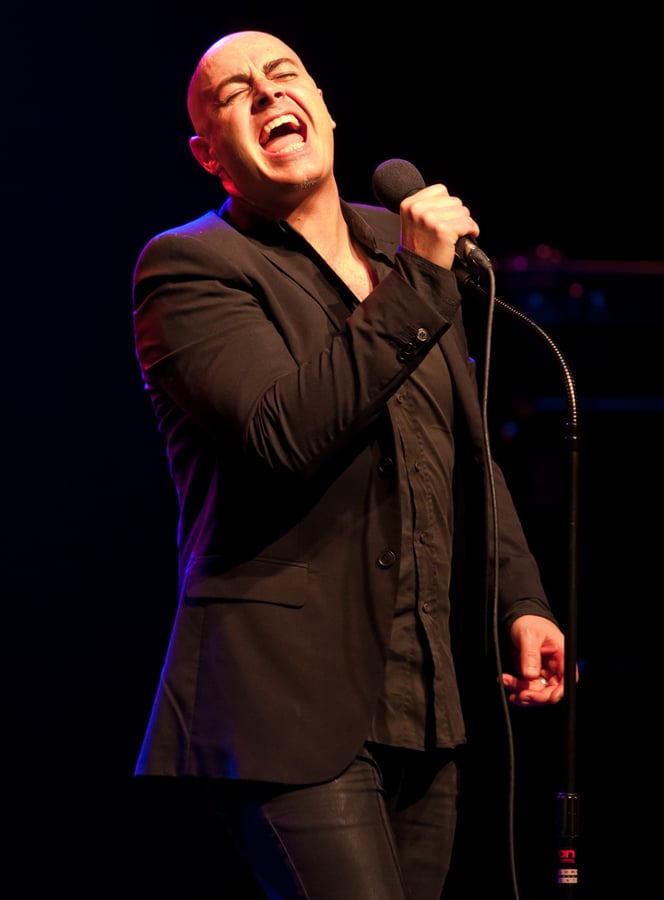
Let me start by saying that it can really be hit or miss whether you can shoot photos with a professional camera at some concerts. Many of the larger acts won't let you into the venue with anything larger than your average point and shoot, let alone a DSLR with a 70-200mm f/2.8 lens. The only exception is if you are able to get a media pass to cover the event. The Furler concert was a bit smaller so there weren't many obstacles preventing me from showing up with a decent camera body and several nice lenses. There were actually a few different people with some good quality gear, and most of them were not sporting a press pass.
So what's needed to get some quality shots at a concert? While it is possible to use a standard point and shoot camera, most concerts are too dark to get images without blur unless you use good quality glass and a camera body that can handle higher ISOs. Using a wide aperture such as f/2.8 and higher ISO (800 and up) will allow for a shorter shutter speed to get a sharp image. Most musicians move around a fair bit; I typically try to use a shutter speed of 1/125th of a second or faster if I can. On some cameras higher ISO will result in noise grain on the image, but some of the most iconic concert photos are also some of the “noisiest”. If a point and shoot camera is the only option you have, try to time your shot for a moment when there is less motion, such as when a vocalist sings a longer vowel so their lips aren't moving as much. You can also take a photo from further back so the motion blur is smaller and less noticeable.
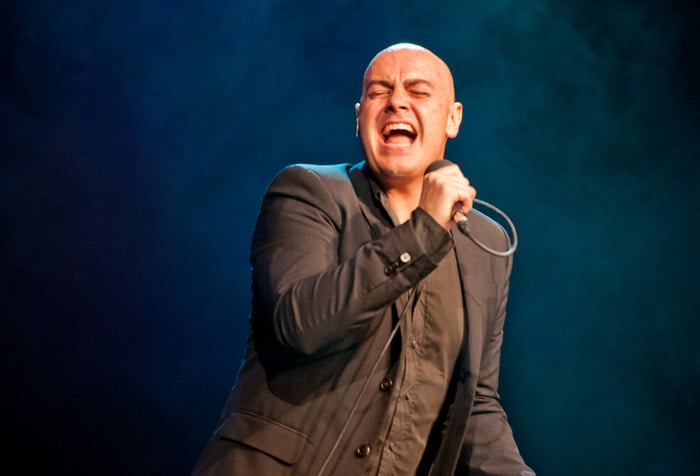
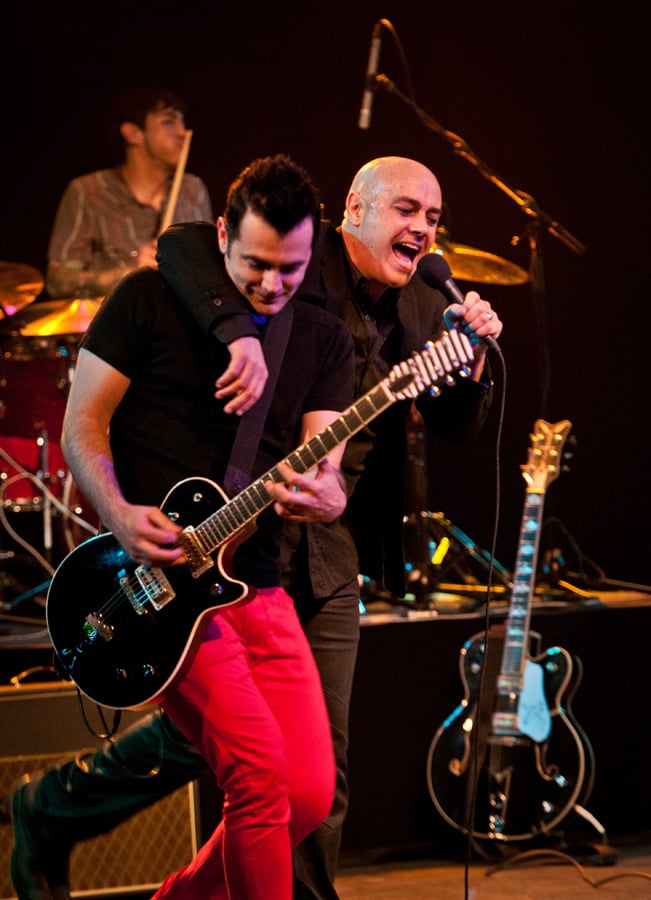
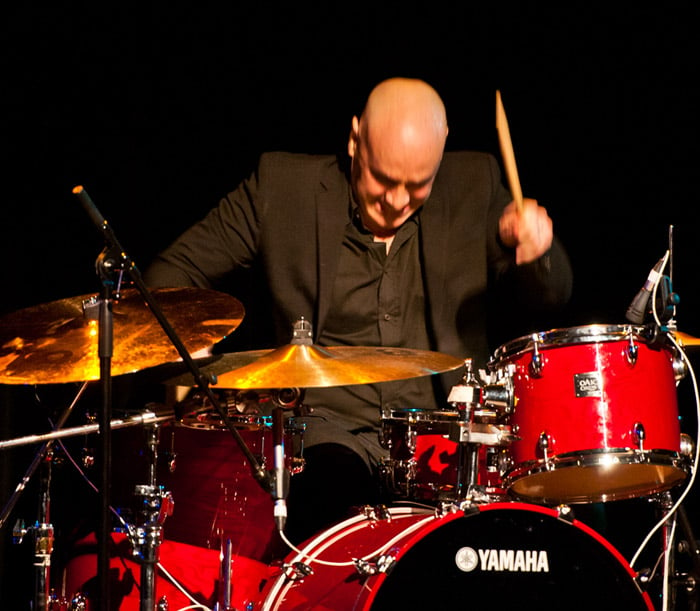
Try to find moments that might have a little more expression to make a photo more interesting. Look for those times where a band member interacts with another member; these people often spend a lot of time travelling together, so there are almost always visual “inside jokes” or smiles shared across the stage. Sometimes guitarists will have “battles” with each other, coming together to one-up each other with their musical prowess. Furler swapped out with his drummer and just killed the kit with an incredible drum solo. Different performers also have different expressions that you can start to pick up on. Furler is well known for pulling away form the mic when he sings a powerful note to control the volume; his whole face shows the power behind the note. The happy side effect for photographers is that his face is also clear of the microphone, allowing for that expression to be more clearly captured.
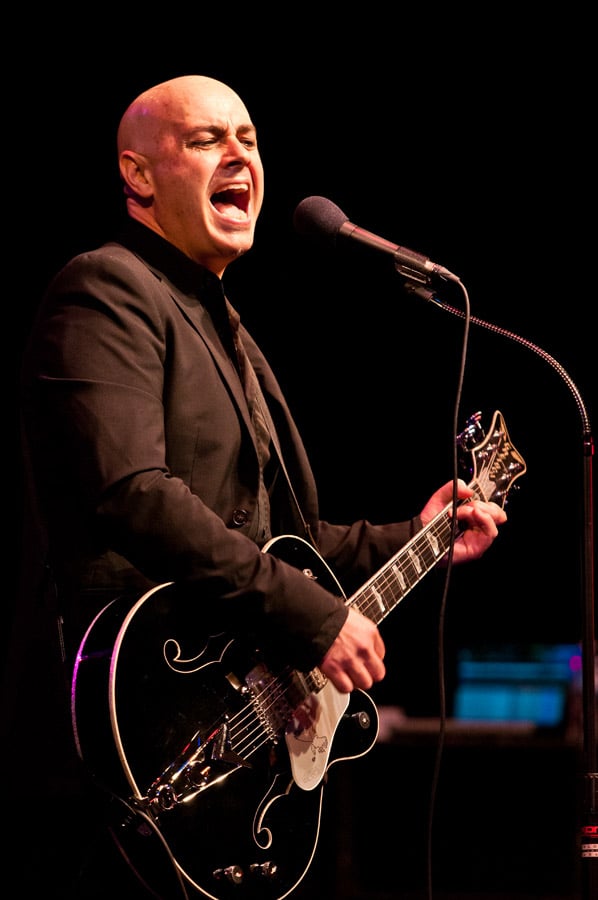
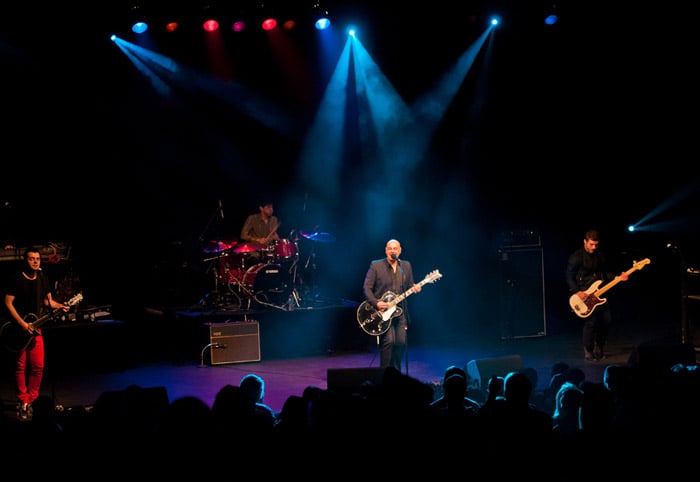
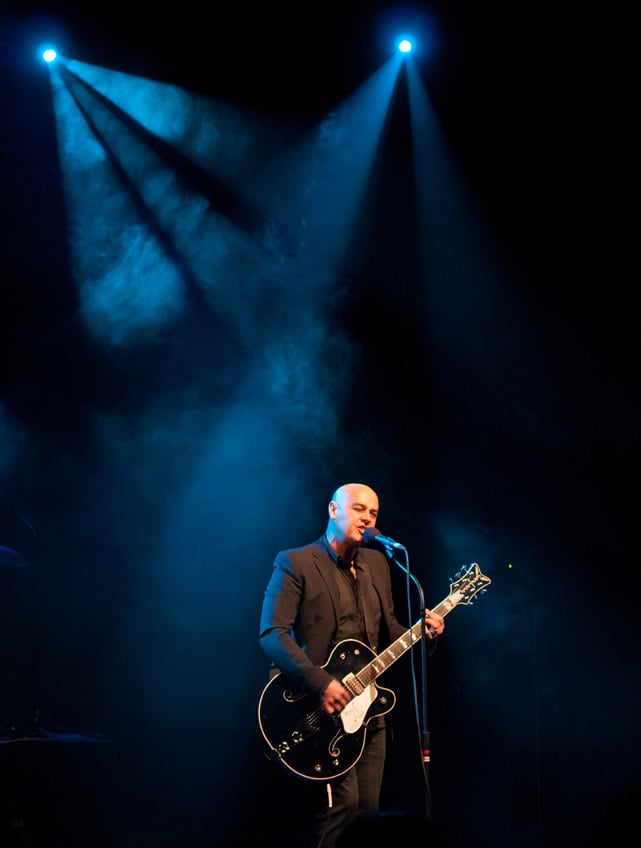
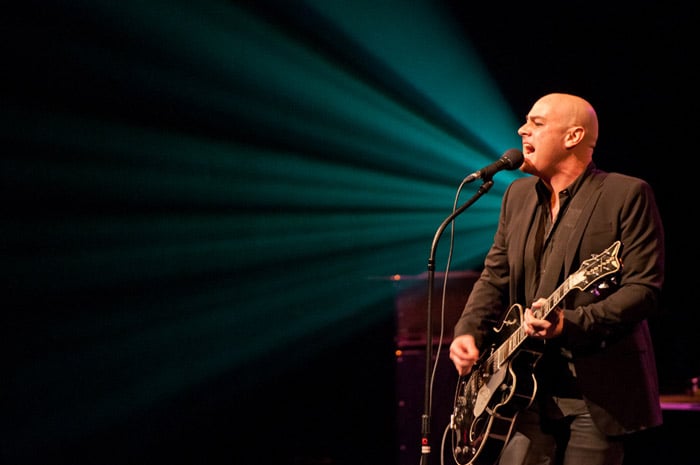
One nice thing about concerts is that the lighting, though relatively dark, is often set up quite well. Smoke machines allow for light beams to stream out in all directions and create some atmosphere, and many productions have started using automated light projectors which create more interesting looks from one song to the next, moving around the stage and room, and changing colour to fit the mood of the song. Pay attention to these light beams and see what patterns they can create, and how they are able to focus attention on your subject. If you're lucky you might even get an incredible silhouette. It's also possible to find extra meaning from the visual; the second photo here reminds me of a Newsboys song called “Shine” which comments on being light, something different that people notice.
Above all be respectful at a concert. People have paid good money to see their favourite performer, and they probably wouldn't appreciate a large lens obstructing their view of the show. Be aware of who's around you and how you may be affecting their sight line. Avoid using flash at all cost; the bright light can be very blinding in a dark room. Even an auto-focus assist light can be enough to diminish someones experience. Be careful if you walk around during the show. It could be hard to see where you're going, and it would suck to have to cut short your concert experience with a trip to the hospital, or worse, the camera shop to replace your expensive shattered lens. And don't forget to put down the camera and just enjoy the music. Who knows, that concert you're seeing could even be the last time you get to see your favourite group live. Photos are great to help remember the show, but it looks a whole lot better live with your own eyes than it does looking through a small viewfinder or LCD screen.
If there is something you'd like to see a tip on, or a topic of interest, feel free to comment below with your ideas.
You can also find my website at www.canadiantumbleweed.com, or follow me on Twitter, Facebook, or Google+.