There's a ricochet ripple effect going on in Kelowna.
It all started in 2023 when the rental vacancy rate for apartments was a super-tight 1.3% and the shortage meant fierce demand and high rents.
Incentives for developers to build apartments leads to an unprecedented boom of 6,000 units being constructed, mostly in those 6-storey complexes that seem to be popping up on every corner.
Those incentives included preferential financing with lower interest rates for developers, city property tax exemptions, extra density, faster approvals and reduced parking requirements.
It brought the cost of construction down to the 6-storey sweet spot -- the maximum height for a cheaper-to-build wood-frame building.
Higher than 6-storeys requires more expensive concrete construction.

The rental vacancy rate in Kelowna is now higher than it's ever been at 6.3%, a five-fold increase from just two years ago.
It creates a glut -- more apartments than people to rent them.
Landlords start to offer incentives to fill apartments -- one or two months free rent, cash bonus, free parking, free wifi.
When that's not enough, rents drop.
The median monthly rent for a typical one-bedroom apartment in the city has slid dramatically from a peak of $2,010 in June 2025 to $1,800 in November.
Despite continued incentives, developers for the most part stop building apartment complexes because of the oversupply.
Construction workers get laid off, bouncing Kelowna's unemployment rate to lofty 11% in November -- the highest in the country and the only city in the double digits.
The vacancy rate could go even higher, rents could go even lower.
And people enjoying discounted rental apartments don't become first-time homebuyers, jeopardizing the all-important entry-level purchase that fuels the chain of move-up buyers.
Like we said, a ricochet ripple effect.
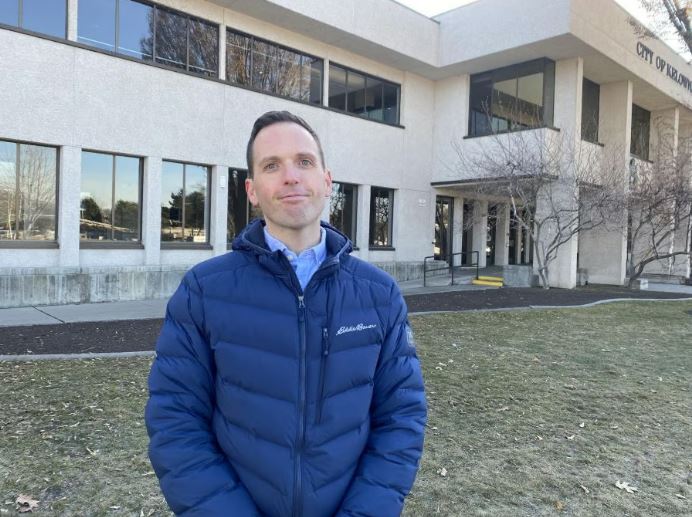
"A healthy vacancy rate is considered to be 3% to 5%," pointed out James Moore, the City of Kelowna's housing policy and programs manager.
"Some might consider 6.3% too high and unhealthy. But, you could also argue that for over 30 years we had low and unhealthy vacancy rates that kept rents high and didn't give tenants a lot of choice."
Choice abounds now as was mentioned previously with the glut, move-in incentives and lower rents.
"With 6.3% we have achieved a much-needed generational influx of rental choice. Tenants now have choice and that is something we should be proud of. It leaves a legacy."
Moore acknowledges the situation also means developers will slow construction dramatically until the glut of apartments is absorbed, the vacancy rate comes down and rents go up.
"But that could take a couple of years," explained Moore.
"The 6.3% vacancy rate may go up even more and rents could come down even more. In the meantime, affordability improves for tenants."

The city's numbers show that since the rental construction boom started in 2021 a total of 4,500 apartment units have been completed.
Another 1,500 apartments are under construction or have permits to be constructed and will come on the market over the next year or two.
Kelowna's total housing stock is about 70,000 homes of all kinds (single-family, townhouses, condominiums and apartments) with 37% of the total, or about 26,000 units, being rentals.

"It's definitely a buyer's market for both home sales and rentals," said Colin Krieg, a realtor with ReMax Kelowna.
"But, I wouldn't call it a crisis. Rising vacancies and slower lease ups are the new reality. Low rents also mean investors may not purchase condominiums because they fear they won't be able to rent them out for what they need to. And, if renters stay in a nice apartment they can rent for $2,000 a month, they aren't turning into first-time homebuyers, which stalls all the move-up momentum."