Breast cancer is the most common cancer among Canadian women, with the exception of non-melanoma skin cancers. It is also the second leading cause of death from cancer in Canadian women.
Despite physical activity being an effective way to improve the unfortunate mental and physical side effects of breast cancer treatment, it is reported that approximately 70% of breast cancer survivors do not exercise regularly.
A recent study from the University of British Columbia has the answer.

In this study, UBC Okanagan is using cash and community to incentivize physical activity and promote a healthy lifestyle in breast cancer survivors.
Named Project MOVE, the program prompts breast cancer survivors to exercise regularly with a combination of microgrants and additional financial incentives of up to $2,000.

Cristina Caperchione, principal investigator of the program and an associate professor with UBC Okanagan’s School of Health and Exercise Sciences, as well as her colleagues, invited breast cancer groups to submit micro-grant applications.
The applications, which outlined exercise initiatives, were reviewed by a panel to determine feasibility and then distribute funds for the proposed initiatives.
Caperchione noted that the action grant program system has been successfully used to stimulate personal growth and improve access to social and health services in the past.

Additionally, the environment in which the activities take place, with peers that have experienced similar struggles, aided in the confidence of the participants, says co-author and professor at UBC Okanagan’s School of Nursing, Joan Bottorff.
“One of our key findings is that Project MOVE offered an opportunity for women to be active with others in a similar position,” says Bottorff.
“This fostered social support and helped build autonomy and confidence in their ability to be physically active. The participants changed their outlook from being physically limited to capable.”
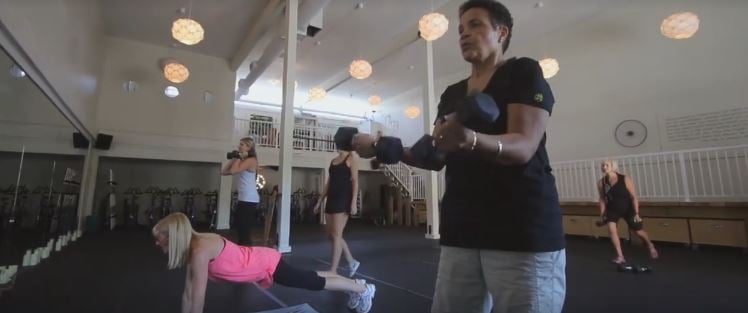
Although the program holds an 86% satisfaction rate with participants and a 96% agreeance that Project MOVE was appropriate for breast cancer survivors, Caperchione says it may not be for everyone.
“Many of the available programs such as dragon boating, yoga and hiking are seen as exclusive and may not be of interest to all women treated for breast cancer,” says Caperchione.
“Our approach supported community-based initiatives designed and implemented by breast cancer survivors themselves. Groups developed their interventions based on their own needs and preferences, and these reflected any unique circumstances and barriers that limited them from being active.”
The study earned financial support from the Canadian Cancer Society for its efforts.