Canada’s media outlets have seen a “dramatic decline” in their ability to reach readers in the wake of Meta’s ban on news, according to a new study.
The Media Ecosystem Observatory’s research was released on the one-year anniversary of Meta’s announcement of its intention to remove journalism from Facebook and Meta.
Mark Zuckerberg’s firm said it made the decision to protect itself from the Liberal government’s Online News Act, which would have forced Meta to pay for news content posted to its platforms.
The Liberals, however, have insisted their law – also known as Bill C-18 – was necessary to fund Canadians news outlets and protect democracy.
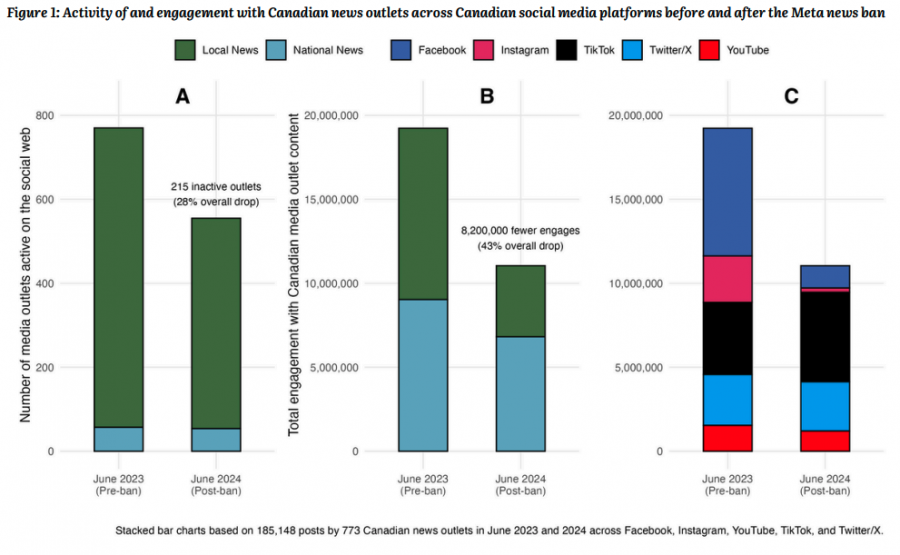
The study from the Media Ecosystem Observatory claims the law, and Meta’s reaction to it, has “reshaped the media landscape in Canada.”
Just under a third (30 per cent, or 212 outlets) of local news platforms that were previously active on social media are now inactive, according to the research.
The loss of Facebook and Instagram to news outlets has “not been compensated by increases on other social media platforms,” the analysts added, explaining that news platforms have seen an overall 43 per cent loss in engagement.
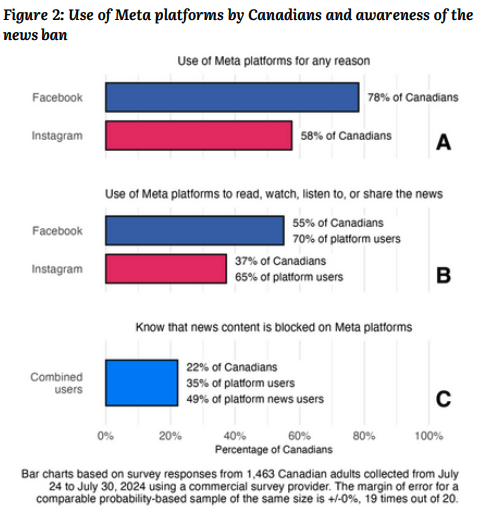
More than a third (36 per cent) of Meta users in Canada, however, still see news on Facebook or Instagram, the study claims.
.jpg)
They don’t get it from the news organizations themselves, but rather from other users sharing the likes of screenshots, which the Media Ecosystem Observatory suggests could “make Meta subject to the requirements of the Online News Act.”
Heritage Minister Pascale St-Onge has previously told NowMedia that that is her own assessment, though prominent law professor Michael Geist has said he does not find that argument persuasive.
When asked about the crisis in news by NowMedia earlier this year, Prime Minister Justin Trudeau made an impassioned attack on Meta and accused the firm of undermining democracy.
But only a tiny proportion of the Canadian population even knows news is banned from Facebook and Instagram, if the Media Ecosystem Observatory’s study is to be believed.
It found that only 22 per cent of people polled were aware of the situation.
At the heart of Meta’s argument with the federal government over the Online News Act is the firm’s contention that news is not important to its users.
The Liberals, as well as certain lobbyists within the media industry, have disputed that, but the research released on Thursday suggests Meta was onto something.
“Overall, Canadians are simply seeing less news online – an estimated reduction of 11 million views per day across Instagram and Facebook – due to the ban,” the Media Ecosystem Observatory explained in a summary of its study.
“Canadians continue to learn about politics and current events through Facebook and Instagram, but through a more biased and less factual lens than before and many Canadians do not even realize the shift has occurred.
“They do not appear to be seeking news elsewhere.”
The Media Ecosystem Observatory is a collaboration between McGill University and the University of Toronto.
Its study can be read in full here.